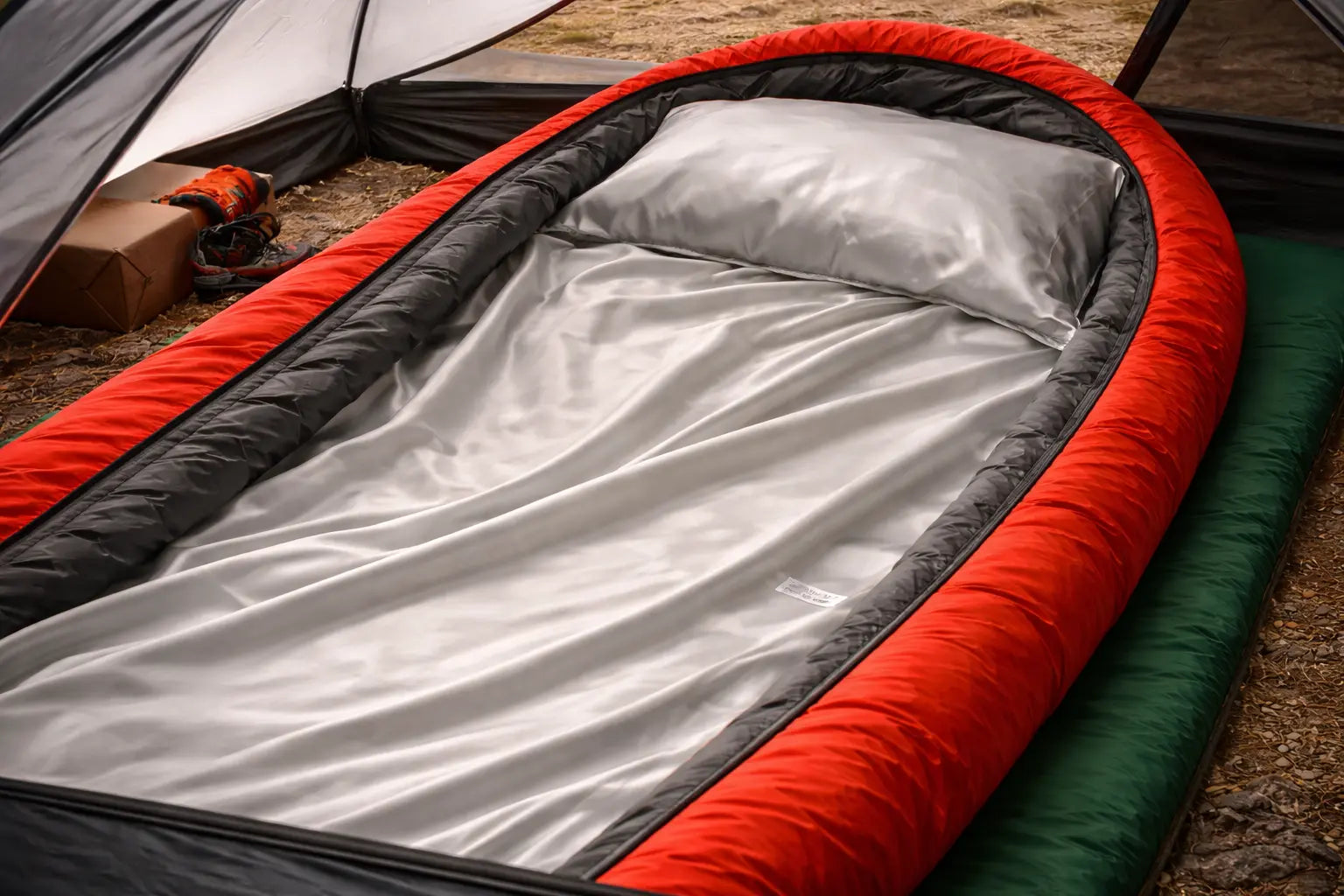
Silk Sleeping Bag Liner: Camping Comfort
After a long day of hiking, all you want is a good night’s sleep. But instead, you’re stuck in a sleeping bag that’s scratchy, traps sweat, or let’s be honest, probably overdue for a wash. Sound familiar? Whether you're backpacking through the mountains or car camping for the weekend, sleeping bag discomfort can seriously mess with your rest.
That’s where a silk sleeping bag liner changes the game. Lightweight, breathable, and ultra-packable, it adds softness against your skin while helping regulate temperature and protect your sleeping bag from sweat and dirt.
What Is a Silk Sleeping Bag Liner?
A silk sleeping bag liner is a thin, breathable layer made from natural silk that fits inside your sleeping bag. It is a lightweight sheet that creates a barrier between you and the bag’s interior.
Its main benefits are comfort, cleanliness, and light insulation. Silk feels smooth against the skin, softening rough or synthetic linings while helping manage moisture on warm nights. It won’t dramatically boost warmth, but it can add a slight layer of insulation in cooler conditions.
Beyond camping, silk liners are popular for hostels, huts, and travel, where bedding hygiene may be uncertain. They also reduce how often you need to wash your sleeping bag, helping extend its lifespan.
Why Campers Choose Silk Over Other Liners
When comparing sleeping bag liners, silk stands out for campers who prioritize comfort, hygiene, and pack efficiency. Here’s why many backpackers prefer it over cotton or synthetic options.
Comfort Against the Skin
Silk’s biggest advantage is its smooth, friction-free feel. It doesn’t cling like some synthetics or feel rough against bare skin. If scratchy bag interiors or plasticky fabrics disrupt your sleep, silk is the best alternative.
Breathability for Warmer Nights
Silk is naturally lightweight and breathable. Unlike heavier cotton or fleece liners that can trap heat, silk helps manage moisture and reduces that sweaty, sticky feeling on warm nights.
Keeps Your Sleeping Bag Cleaner
Body oils, sweat, sunscreen, and dirt accumulate inside your sleeping bag over time. A silk liner acts as a washable barrier, protecting your bag and reducing how often it needs cleaning.
Packs Small for Backpacking
For ultralight setups, silk is ideal. It compresses down extremely small, easy to carry without sacrificing pack space.
Does a Silk Sleeping Bag Liner Add Warmth?
Yes, but only a small boost. It can add a few degrees of warmth only.
The real value is comfort and protection. Silk adds a light layer that feels better against your skin, creates a cozy microclimate, and acts as a barrier between you and your bag.
It’s most useful during shoulder seasons, in drafty huts, or on cooler summer nights, but it won’t turn a mild-weather bag into a winter one.
Silk vs Cotton vs Synthetic Liners (Which Is Best for Camping?)

Not all sleeping bag liners are created equal. The right choice depends on your priorities, whether it's pack weight, budget, warmth, or comfort. Here's a quick breakdown to help you compare:
|
Material |
Pros |
Cons |
|
Silk |
- Soft, luxurious feel - Breathable - Ultra-lightweight - Packs down very small |
- More expensive - Needs gentle washing |
|
Cotton |
- Inexpensive - Easy to wash and dry (at home) |
- Bulky - Heavier - Slow to dry if damp |
|
Synthetic |
- Durable - Can provide more warmth - Often less expensive than silk |
- May feel clammy or cause static - Bulk varies |
How to Use a Silk Sleeping Bag Liner (Camping + Travel)
Using a silk sleeping bag liner is straightforward but setting it up properly improves comfort and prevents bunching during the night.
Step-by-Step Setup
- Lay it flat inside your sleeping bag. Unfold the liner and position it neatly before getting in to avoid twisting.
- Sleep directly inside it. Slide in like a sheet. A light base layer works in cooler temperatures, but direct contact maximizes comfort and cleanliness.
- Use it alone in warm weather. On hot nights or in hostels, the liner can replace a sleeping bag entirely.
- Pack separately if damp. Store it in a breathable sack if slightly wet to prevent moisture transfer.
Care Guide: Washing and Maintaining a Silk Liner
Silk feels delicate, but with proper care, a liner can last for years. The key is gentle handling and avoiding heat.
Washing Tips
-
Hand wash or use a delicate cycle
Wash in cold or lukewarm water with a mild detergent made for delicates. Avoid bleach and fabric softeners, as they weaken silk fibers. -
Use a mesh laundry bag if machine washing
This reduces friction and prevents snags during the spin cycle.
Drying Tips
-
Air dry only
Lay flat or hang in the shade. Prolonged direct sunlight can fade and weaken the fabric. -
Skip the dryer
Heat can shrink or damage silk, even on low settings.
Storage Tips
-
Store completely dry
Packing a damp liner can cause mildew and fabric breakdown. Let it air out fully before long-term storage.
Gentle washing and air drying are all it takes to keep your silk liner soft and trail-ready.
Final Takeaway
A silk sleeping bag liner may seem like a small detail, but it delivers big wins where it counts: comfort, breathability, packability, and hygiene. Whether you're backpacking through rugged trails or road-tripping across campgrounds, it adds a layer of softness and cleanliness that improves sleep without adding weight.
FAQ:
Is a silk sleeping bag liner worth it for camping?
Yes, if comfort, cleanliness, and packability matter to you. While it’s not a must-have for every camper, a silk liner can noticeably improve sleep quality and help extend the life of your sleeping bag, especially on longer trips.
Does it actually keep a sleeping bag cleaner?
Absolutely. A liner acts as a barrier against sweat, body oils, and dirt, which would otherwise soak into your sleeping bag. It reduces how often you need to wash the bag itself, saving wear and tear over time.
Does it add warmth?
Only a little. Silk liners may provide a few degrees of extra warmth, but they’re not designed to dramatically increase your bag’s temperature rating. They’re best thought of as a comfort layer, not a heat solution.
Can I use it without a sleeping bag?
Yes! In warm climates, hostels, or huts, a silk liner can be used on its own.
Is silk too delicate for camping?
Silk is softer than synthetic, but it's surprisingly durable for its weight, especially if you buy a quality liner with reinforced seams. Still, it's not ideal for rough conditions or bushwhacking-heavy trips.